NGC 6960 / IC 5146 / M31
08/18/2026 -- Finally, after lots of cloudy / rainy nights... an evening with few (if any clouds) and modest moon (setting after 23:20). After such a long gap, testing basics with a familiar narrow band target -- NGC 6960 (West Veil Nebula). With temperatures still in the 70's at 23:00, set the camera chiller to 5C.

 |
| Seeing forecast for 08/18-19/2026 showing few clouds...and no moon after 23:20. |
Started with a PHD drift alignment. Remarkably, after weeks sitting idle, the initial polar alignment error was modest at -5'. Turned to the left...noted visible shift in the OTA...and overcompensated at ~9'. Turned back to the right (again, noted significant shift in the OTA) and saw -17. :< Back to the left. After ~an hour of back and forth shenanigans... eventually brought this to ~4'. Then tested the internal guider while running an initial autofocus. Found the current focus for the OTA to be close to optimal...well within range for the autofocus routine in Ekos.
Set up the camera tab for 20x80s UV/IR light frames and 20x120s dual narrow-band light frames...and set up the scheduler to repeat these until 04:45 tomorrow...and launched the task.
Overnight, sadly, only seven UV/IR light frames for NGC 6960 were captured. The last light frame was collected around 00:50 with subsequent attempted captures failing. Trees? Dew? Individual light frames appeared to have high quality (round stars, good exposure, nice color).
 |
| Ekos Analyze tab for 08/18-19/2026 with limited collection on NGC 6960 before further collection failed. |
 |
| Indi Allsky backyard camera measurements for 08/18-19/2026 showing excellent skies, no clouds with a pseudo sky quality metric around 4200 overnight. |

 |
| Weewx outdoor weather station measurements for 08/18-19/2026 showing no wind or gusts with temperatures falling to ~70F overnight. |
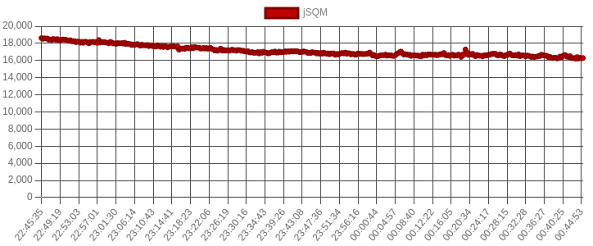
08/19/2026 -- Less favorable skies with clouds (low and mid-altitude) expected overnight... and picking up after midnight. Started PHD2 at 21:30 and achieved an initial polar alignment error of 3.71'. Left this alone...called it good enough. Edited the schedule from 08/18 to repeat the combined UV/IR and dual narrow-band collection for NGC 6960 until 01:30...and then switched to just UV/IR collection on NGC 7331. Verified that the camera chiller temperature was set to 5C for these tasks. When the scheduler was started at ~21:40, temperatures were ~76F and the Indi Allsky backyard camera showed a pseudo sky quality metric of ~16,600 (in moon mode...with the moon almost set).

 |
| Seeing forecast for 08/19-20/2026 showing clouds expected (low and mid-altitude only) ... especially after midnight according to cleardarkskies. |
Ultimately, 20x80s UV/IR and 6x120s dual band light frames were collected for NGC 6960 (only). There were collected at 5C with gain 285 and offset 24. Clouds rolled in and ended collection for the rest of the morning.
 |
| Ekos Analyze tab for 08/19-20/2026 showing reasonably good collection and guiding until clouds appeared ending the ability to do frame solving, focusing and guiding. |
 |
| Indi Allsky backyard camera metrics for 08/19-20/2026 showing a window between clouds at 23:25 until smaller clouds started moving through 00:45 and skies were completely blocked starting at 01:15. |

 |
| Weewx outdoor weather station results for 08/19-20/2026 showing no wind with temperatures falling to ~72F with very high humidity over night. |
Collected 20x calibration frames (finally). Set the camera cooler to 5C and collected flat frames for UV/IR (8s) and the dual band filter (12s) with gain 285 and offset 24 using the large neutral filter under the LCD panel during night time. Then covered the OTA and collected dark frames (with the dark filter in place) for 80s, 120s, 8s and 12s time frames.
09/6/2026
Testing the system after upgrading to Ubunto 26.04.01 LTS after Indi drivers started to fail under 24.04 LTS. Since Kstars-bleeding is not yet available, running indiserver on the Odroid C4 and Kstars/Ekos and PHD2 on the main server.
The seeing prediction for the night sky has change dramatically and currently (20:58) suggests clear skies overnight. Clearoutside predicted no issues with dew. Set the Svbony 405CC chiller to 5C.

 |
| Seeing forecast for cleardarkskies (top) and meteoblue (bottom) suggest clear skies overnight. |
Initial PHD2 drift error was large at ~ -32'. Adjusted to the left...and immediately corrected to below 1'. Started the imaging preparation session at ~20:50...and finished with alignment at ~21:25.
Set up the scheduler for IC 5146 (Cocoon Nebula). Ran into a wide range of problems with Ekos failing to actually complete a focus/align/guide session and only captured a single light frame. Then at 22:00, found that a tree limb came into the frame! Trees have grown extensively over the summer...blocking a huge fraction of the sky visible from the rear deck. :< Switched to NGC 6960 and restarted the scheduler. The Camera tab has a sequence file with 20x80s UV/IR frames followed by 20x120s dual narrow-band frames.
This collection also failed...repeatedly. The mount is getting 'stuck' and tracking is working only intermittently. Looking at repeated attempts to focus and plate solve and the mount will suddenly stop tracking in RA. Tried parking & repositioning...to no effect. Set a target lower in th sky (NGC 7640) to see if altitude made any difference (since NGC 6960 is at the zenith). Clearly, bringing in the mount and cleaning the gears ... adjusting... is needed.
Tried turning off everything (mount, kstars, indiserver) and restarting. Created a M31 mosaic and configured this in the scheduler after NGC 7640. No luck. The mount is still not tracking. Parked (again) and went through the menus on the hand controller...looking for any insights into possible sources of confusion. Upon witnessing the mount slewing, noted the ST port guide camera cable snagging the cap on the polar scope...which might have been the issue. After fixing this cable on the mount, re-tried slewing and plate solving on M31. No luck...the mount is still not tracking. Next, tried using KStars / Ekos directly...no scheduler. Still no luck. After slewing (again) to M31, started up PHD2 on the main server and tried guiding there. Oddly, the mount was tracking and PHD2 reported a guide error of ~1.34" RMS (total, RA and DEC)...which is quite good. Guiding with PHD2 was fine. Then switched back to the built-in Ekos guider. This started to calibrate w/o problems. Now nearly midnight. Restarted the scheduler with only M31. Now, the mount was tracking without issue...focuser worked with round stars. But then, streaking started again within the focuser... and resolved itself. Does appear to be a mount problem...not a software problem(?). With only one streaked image w/o tracking, the focuser did complete in 6 iterations...moving on to the internal guider. Ultimately, gave up...noting a hardware (not software) issue creating the stalled / failed tracking.
09/07/2026 -- Cloudy this evening... but clear enough to test out a potential fix for the failed tracking on the Celestron CGEM DX mount. From Google's AI summary, noted power problems as a frequently suggested fix for intermittent tracking problems. Ordered a proper Celestron power adapter (that screws into the mount) to replace the sus power adapter in use for years with this mount. Using a needle, pried the two opposite metal tabs that engage the central pin in the power cord for this original (sus) adapter...and noted significantly greater insertion force when putting the power plug into the mount... providing some confidence that a loose connection may have been an issue.

.gif) |
| Seeing forecast for 09/07-08/2026 from meteoblue (top) and cleardarkskies (bottom) suggesting not a great imaging session with lots of high altitude and some mid and low atitude clouds overnight. |
Performed a new polar alignment and achieved <1" error. Set up the scheduler for IC 5146 as a test target to see if this very basic fix did anything to help with tracking. Noted no immediate problems capturing frames for focusing and plate solving (round stars...no streaks). But the internal guider continued to struggle to calibrate. Using PHD2 on the main server, the latency was too long and it didn't guide successfully. Set up PHD2 on the Odroid C4 (which works...even though KStars itself is not yet available for Ubuntu 26.04) and this worked succesfully.
So, KStars / Ekos on the main server, indiserver with the drivers on the Odroid C4 and PHD2 loaded there also (via XRDP with XFCE4 desktop). This setup did guide with guide errors of ~1.5" RMS. Shrinking below 1". In examining the light frames captured for IC 5146...the sky background was poor...stars looked over-large...but they were round. No streaks...no problem tracking. Seems like the very simple fix of adjusting the power plug did make a difference.
Sadly, although the tracking problem appears greatly improved (almost completely solved), collection overnight for M31 mosaic in the scheduler did not do well according to the Ekos Analyze tab with guiding errors leading to aborted collection. However, oddly, in examining the folders in the Odroid C4, there are a range of light frames collected (including one unlabeled complete est of 20 from 09/08 between 04:15 and 05:42 UTC (23:15 to 00:42 Eastern which need examined).


Comments
Post a Comment